Section 1: The Challenge
Context
Oracle’s Autonomous Database is designed to eliminate manual labor through self-driving, self-securing, and self-repairing capabilities. However, "autonomous" shouldn't mean a complete loss of control. For enterprise database administrators (DBAs), fine-tuning database behavior through parameter configurations remains essential for optimizing specific workloads. These deep technical adjustments remained laborious and held the potential to create significant systemic instability.
Problem Statement
How might we design a complex parameter configuration interface that balances the power of autonomous optimization with the human requirement for precise system tuning?
The existing workflows for modifying database parameters were handled through customer APIs and were often:
Manual: Users would configure each parameter for each database, across their entire infrastructure, one at a time.
High-Risk: Applying parameter configurations without simulated impact analysis risked accidental downtime or degraded performance during critical business cycles.
Cognitively Overwhelming: Managing hundreds of deeply technical, interdependent variables made it incredibly difficult for DBAs to make safe, confident tuning decisions.
Objective
Create a Scalable UX Framework and Interaction Model that empowers technical users to safely discover, validate, and execute granular parameter configurations, ensuring system customization supports—rather than disrupts—enterprise-level workflows.
Section 2: The Approach
VISUALIZING Design & ALIGNING MENTAL MODELS
To solve the cognitive load dilemma, I treated the database configuration workflows not as static inputs, but as a tiered interactive system.
Expanding complexity: By its very nature giving users this level of control meant introducing a significant number of choices and inputs. Moving forward we needed a clear visual hierarchy and some way to obscure these choices from the zero state.
Behavioral Insights: Through UX research, I isolated the exact "anxiety peaks" in the DBA workflow—primarily the moment right before committing, where the fear of unintended side effects was highest.
Rapid Prototyping: I utilized Figma to build rough mocs for the various user flows. This let stakeholders experience the configuration guardrails firsthand so we could iterate before refining design.
Section 3: The Execution
BUILDING THE PARAMETER CONFIGURATION FRAMEWORK
There were two key concepts that arose after rough design review.
Security Concerns: We needed a way to restrict certain actions based on the user’s privileges. Allowing every user to to fully customize their configuration created the potential for widespread disruption.
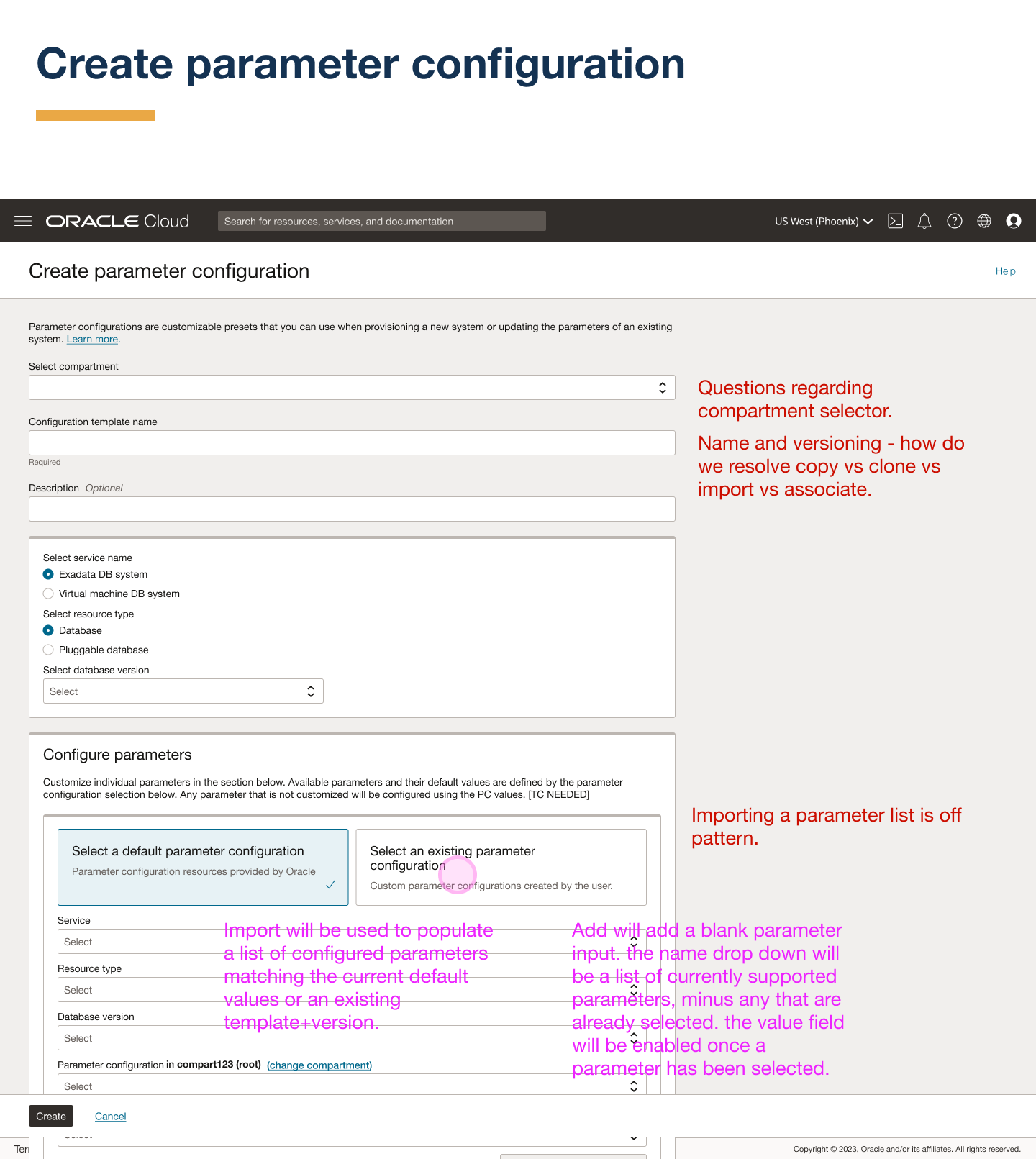
Scalability: The initial designs presented two flows. One was streamlined and utilized a default configuration. The second was a robust suite of fully customizable parameters (in some cases, hundreds of selections were needed). This was a huge task for the average user, especially if they only needed to adjust one or two parameters.
The core solution that I presented relied on introducing “configuration profiles”. Scoping to turn a high-friction technical task into a predictable, governed experience.
Guardrails: Creating a configuration profile allowed for validation and testing without risking disruption.
Organization Wide Access: Creating a configuration profile was locked to users with the highest permissions in your organization, however other users were then able to utilize these customized profiles.
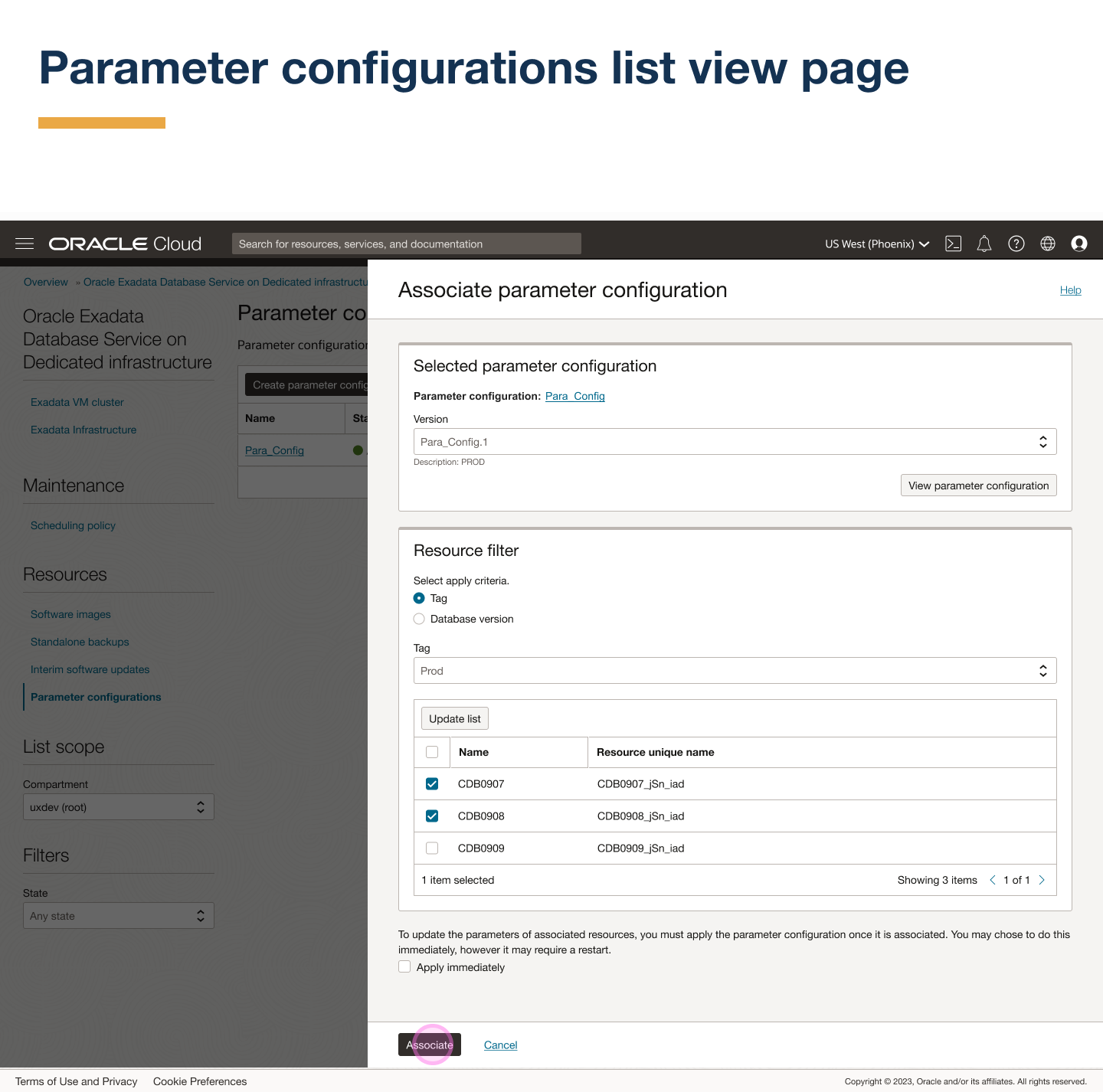
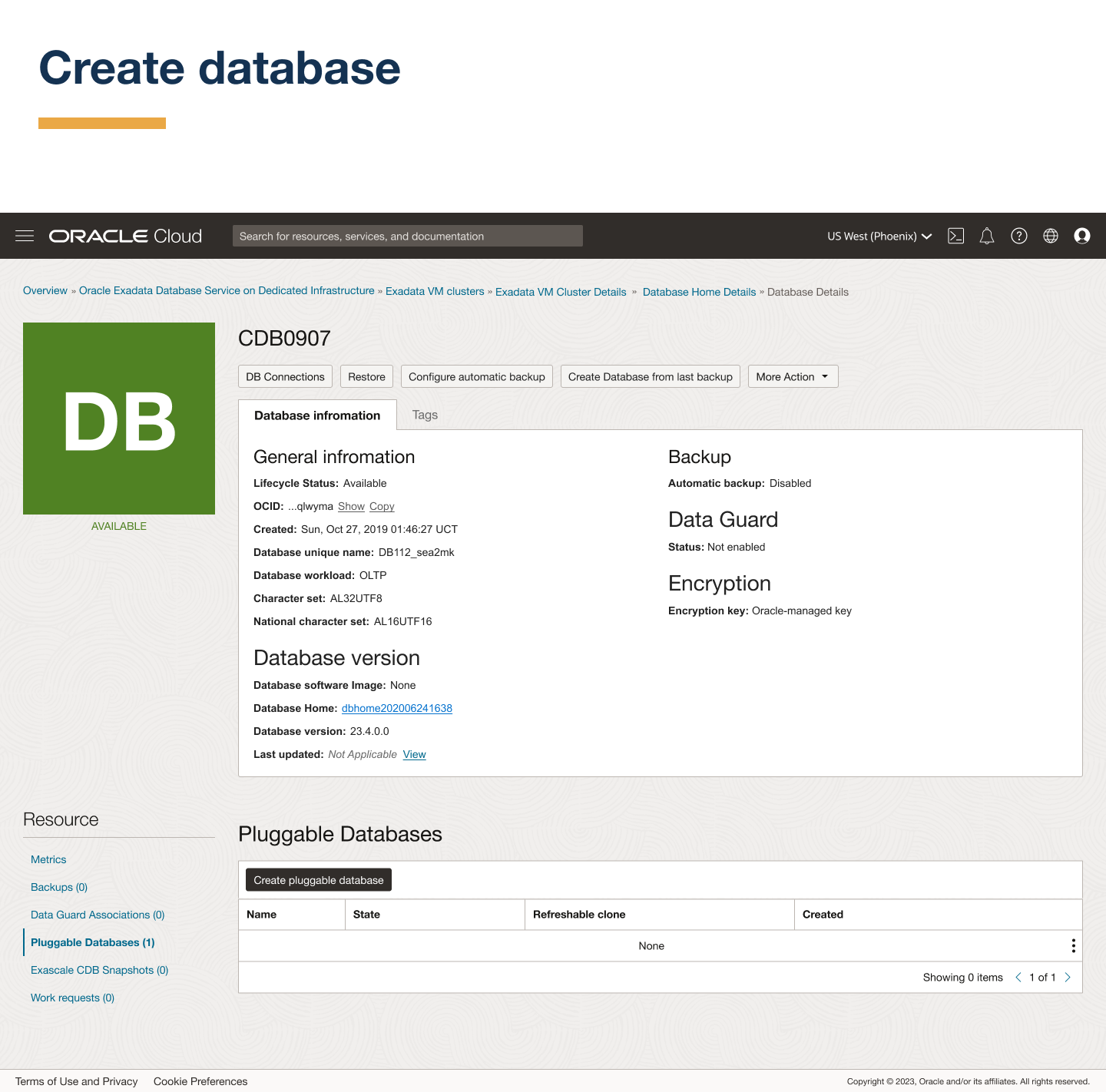
Scalability: Once a configuration profile existed, users could associate any number of databases to that profile at a time and if a change was made to the profile it would then be deployed across all associated databases.
Section 4: The Result
Impact at Scale
Reduced Friction: I designed a solution that provided the granular control, DBAs needed to manage complex environments with higher confidence and fewer manual workarounds.
Systemic Consistency: Established a unified UX language for Autonomous Database Services, reducing "UI debt" and making it easier for cross-functional teams to align on product roadmaps.
Mitigated Risk: I was able to satisfy the core user need without introducing additional risk and safeguarding the experience of other user types.